.jpg)
What Can Filtered Greywater Be Used For? 10 Practical Uses for Homes, Gardens & Off-Grid Living.
Discover 10 practical ways to reuse filtered greywater safely for gardens, toilet flushing, composting and off-grid living.
Treated greywater can be safely reused for non-potable purposes including watering ornamental gardens, flushing toilets, maintaining composts, washing vehicles and cleaning outdoor areas. When treated using an appropriate filtration system, such as the Biolan Greywater Filter, it helps reduce mains water consumption, lower water bills and support off-grid living.
Greywater is wastewater from showers, baths, bathroom sinks and washing machines. It does not include wastewater from toilets (blackwater).
Greywater is often seen as a waste product, something to get rid of as quickly as possible. But when treated correctly, it becomes a valuable resource. The Biolan Greywater Filter uses natural filtration media to remove debris and reduce organic contaminants from household greywater. The process requires no electricity, making it suitable for gardens, cabins, glamping sites and other off-grid installations.
Greywater reuse is increasingly recognised as an important part of sustainable water management, particularly in areas where water conservation is becoming more important.
Using a system like the Biolan Greywater Filter, you can safely reuse water from showers, sinks and washing machines, reducing waste, saving money, and making your home, business or glamping site more self-sufficient while reducing reliance on mains water.
Benefits of using greywater
· Conserves potable water
· Reduces pressure on drainage systems
· Lowers water bills
· Supports sustainable gardening
· Ideal for off-grid developments
· Makes better use of wastewater
Who can benefit from greywater reuse?
- Homeowners
- Off-grid properties
- Shepherd's huts
- Glamping sites
- Holiday parks
- Campsites
- Garden offices
- Eco-builds
.jpg)
Key Takeaways
- Filtered greywater can be safely reused for many non-potable purposes.
- It is ideal for watering ornamental gardens, flushing toilets and outdoor cleaning.
- Avoid using greywater for drinking, food preparation or directly on edible crops.
- Electricity-free systems such as the Biolan Greywater Filter make water reuse practical for homes, glamping sites and off-grid properties.
- Prompt reuse and biodegradable cleaning products help maintain water quality.
How much water could you save?
The Biolan Greywater Filter is designed to treat up to 300 litres of greywater per day, making it suitable for many households and small off-grid properties. The actual amount of mains water saved will depend on how the treated water is reused, household occupancy and daily water consumption.
How it works
· Greywater leaves showers, sink s or washing machines.
· It passes through natural filtration media.
· Organic matter is broken down within the natural filter media while suspended solids are retained.
· The filtered water exits ready for approved non-potable uses.
· Water is reused instead of discharged.
So once your greywater has been filtered, what can you actually do with it?
In the UK, treated greywater may be reused for suitable non-potable applications where systems are correctly designed and operated.
1. Irrigating Lawns, Trees & Shrubs
One of the most common and effective uses is outdoor irrigation.
Filtered greywater is ideal for non-potable water use such has:
- Lawns
- Hedges
- Trees
- Ornamental plants
Because the water has passed through natural filtration media, it’s free from large particles and significantly reduced in contaminants.
Important:
Avoid using greywater directly on edible crops (especially root vegetables).
2. Toilet Flushing
Filtered domestic greywater can be reused indoors for toilet flushing, particularly in:
- Off-grid cabins
- Glamping pods
- Garden rooms
- Eco-build homes
This is one of the easiest ways to cut mains water usage significantly. Toilet flushing accounts for a significant proportion of household water consumption, making it one of the most effective uses for filtered greywater.
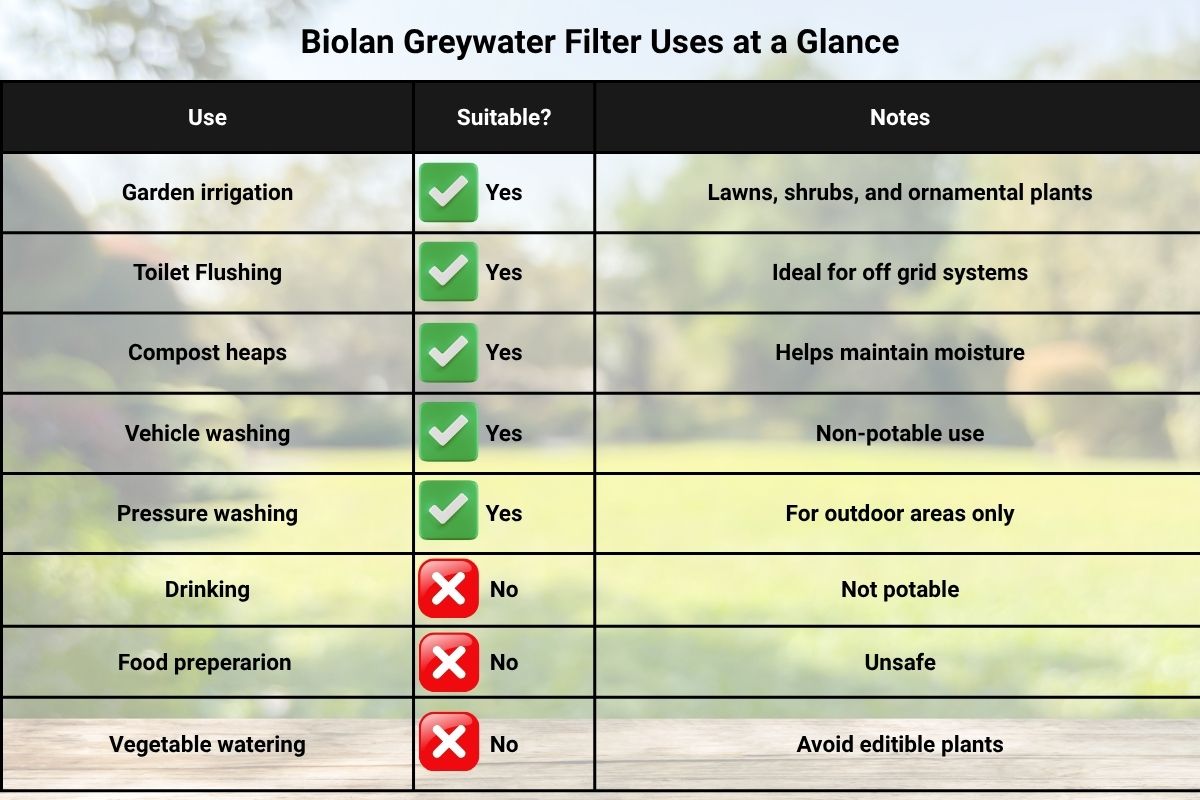
3. Feeding Compost & Soil Systems
Filtered greywater can be used to maintain moisture in compost heaps.
This helps:
- Speed up decomposition
- Maintain microbial activity
- Prevent compost from drying out in warmer months
It’s a simple, low-risk use that fits well with sustainable garden compost practice.
And it’s wastewater reuse is a sustainable option for off-grid setups – in a shepherd’s hut, off grid homes and glamping pods.
4. Supporting Planters & Non-Edible Growing Areas
Filtered greywater works well for:
- Flower beds
- Decorative planters
- Non-edible planting zones
This is particularly useful in off-grid water systems such as glamping sites and landscaped areas, where appearance matters but water demand can be high.
5. Yard and vehicle cleaning
Household wastewater can also be put to good use for general outdoor cleaning tasks, helping reduce reliance on mains water for jobs that don’t require potable quality.
Typical uses include:
- Washing down vehicles, trailers or equipment
- Cleaning yard areas, pathways and hardstanding
- Rinsing tools, boots and outdoor gear
This is particularly useful on construction sites, farms, and glamping locations, where water demand can be high and access may be limited.
Good practice:
Stick to light cleaning tasks and avoid using greywater where hygiene is critical or where run off could enter sensitive areas.
6. What You Should Avoid
Domestic greywater isn’t drinking water, even after filtering. Best practice includes:
- ❌ Don’t use for drinking or food preparation
- ❌ Avoid direct use on edible crops
- ❌ Don’t store for long periods (use promptly)and use an appropriate water storage tank
- ❌ Avoid harsh chemicals entering the system (bleach-heavy products, etc.)
Why It Matters
Reusing treated greywater isn’t just about sustainability, it’s practical and:
- Reduces mains water usage
- Lowers operating costs (especially for sites)
- Supports off-grid living
- Makes better use of a resource you’re already producing
With systems like the Biolan Greywater Filter, it’s possible to do this without electricity or complex infrastructure, making it accessible for everything from homes to glamping setups.
Make Better Use of Your Water
If you’re already generating domestic wastewater, filtering it is the first step, but using it effectively is where the real value comes in.
The Biolan Greywater Filter is a practical resource rather than a waste product. With appropriate filtration it can safely support irrigation, toilet flushing, compost maintenance and outdoor cleaning, helping reduce potable water demand while supporting more sustainable homes, gardens and off-grid developments.
✔ No power required
✔ Scalable for different setups
✔ Suitable for homes, cabins and glamping sites
Greywater filtration is increasingly used by homeowners, glamping operators and off-grid developments to reduce reliance on mains water while making practical use of wastewater that would otherwise be discharged.
Plastic Solutions' expert tip:
Use biodegradable soaps and cleaning products wherever possible. Avoid bleach-heavy chemicals and reuse treated greywater promptly rather than storing it for long periods. This helps maintain filter performance and improves water quality for reuse.
👉 Explore the Plastic Solutions range of electricity-free greywater filtration systems to find the right solution for your home, garden or off-grid project.
https://shop.plasticsol.com/collections/grey-water-purification
FAQs
Can kitchen sink water be filtered?
Kitchen sink water can usually be treated as greywater, although high levels of grease, fats and food waste may reduce filter performance. Scraping food waste into a compost bin and avoiding pouring cooking oils down the sink helps the filtration system operate more efficiently.
Can you water vegetables with filtered greywater?
Treated greywater is best used on lawns, ornamental plants, trees and shrubs. It is generally recommended to avoid applying greywater directly to edible crops, particularly root vegetables or leafy greens that may come into direct contact with the water. If growing vegetables, use mains water or harvested rainwater unless additional treatment has been carried out.
Does filtered greywater smell?
A properly functioning greywater filtration system should produce very little odour. To prevent smells developing, filtered greywater should be used soon after treatment rather than stored for extended periods. Using biodegradable cleaning products and avoiding excessive grease or harsh chemicals also helps keep the system working efficiently.
Can washing machine water be reused?
Yes. Water from washing machines is one of the most common sources of greywater and can often be filtered for reuse, such as watering ornamental gardens or flushing toilets. Using environmentally friendly detergents helps protect plants and supports the performance of the filtration system.
Does greywater attract insects?
Not when managed correctly. Freshly filtered greywater that is used promptly is unlikely to attract insects. Problems are more likely to occur if untreated or filtered greywater is left standing for long periods, which is why it should be reused as soon as possible after treatment.
Can I store filtered greywater?
It is generally recommended to use filtered greywater soon after it has been treated. Storing greywater for long periods can allow bacteria to multiply and may lead to unpleasant odours. If storage is necessary, it should be kept to a minimum and the water used as quickly as practical.
Can filtered greywater be used during droughts?
Yes. Filtered greywater can provide an additional water source during dry weather, helping reduce demand on mains water for tasks such as watering ornamental gardens or cleaning outdoor areas. However, you should always check whether any local water restrictions or environmental regulations apply during periods of drought.
Does a greywater filter need electricity?
Not all systems require electricity. The Biolan Greywater Filter operates without mains power, using natural filtration media to treat greywater. This makes it suitable for homes, cabins, glamping sites and other off-grid locations where a simple, low-maintenance solution is preferred.
How often is filter media replaced?
The filter media should be inspected regularly and replaced in accordance with the manufacturer's recommendations. For the Biolan Greywater Filter, the filter material is typically replaced after approximately 100 days of use, although the exact interval will depend on water usage and the type of wastewater being treated.
Can hotels use greywater systems?
Yes. Hotels, guest houses and other accommodation providers can use greywater systems to reduce mains water consumption, particularly for landscape irrigation or toilet flushing where permitted. The size and design of the system should be matched to the property's water usage and local regulations.
Can campsites use greywater?
Yes. Campsites, glamping sites and holiday parks are well suited to greywater systems, particularly where water conservation is important. Reusing filtered greywater for irrigation, toilet flushing or outdoor cleaning can help reduce operating costs while supporting more sustainable site management.
Is greywater the same as sewage?
No. Greywater and sewage are different. Greywater is wastewater from showers, baths, bathroom sinks and washing machines. It does not normally contain toilet waste. Sewage (sometimes called blackwater) includes wastewater from toilets and contains much higher levels of pathogens, requiring more intensive treatment before it can be safely reused or discharged.
OTHER POSTS IN THIS CATEGORY:
.jpg)
Learn how Tŷ Hafan uses the Biolan eco220 hot composter to recycle food waste on-site, reduce costs, and nourish hospice gardens year-round.

Discover 10 practical ways to reuse filtered greywater safely for gardens, toilet flushing, composting and off-grid living.
.jpg)
How a Bristol community eliminated commercial waste fees turning 4.5 tonnes of food scraps into rich compost in 6 weeks with a Biolan hot composter
.jpg)
Duckling Barn Glamping needed off-grid, eco-friendly sanitation. A 200L composting toilet offered a waterless, odourless, sustainable solution.

.png)
The Biolan 220eco composter handles all food waste, including cooked scraps, all winter. Use bulking material for perfect, odour-free compost

Yes, you can compost in winter! Learn how to keep your bin active during the UK's cold months with tips, tools, and winter-ready composters.

SEARCH BY AUTHOR:
